Summary and involvement
Each customer gives you three weapon requirements and a move limit. Matching pieces raises those stats, but simply passing the requirement only gives you a Standard result. The better you do and the fewer moves you use, the better the finished weapon becomes.
The loop
A run contains five customer orders. For each one you choose an order, forge the weapon, receive the result and then visit the shop. Gold is used during the run, while Renown is kept between runs for permanent progression.
What I did
- Design document, run structure and economy
- Quality, scoring, upgrade and relationship systems
- UI and UX across every screen
- Characters, icons and visual direction
Why the board has stakes
Passing the requirements is only the minimum. You can keep matching to improve the quality, but unused moves also have value. I wanted the player to decide when the weapon is good enough instead of always using every move automatically.
Features
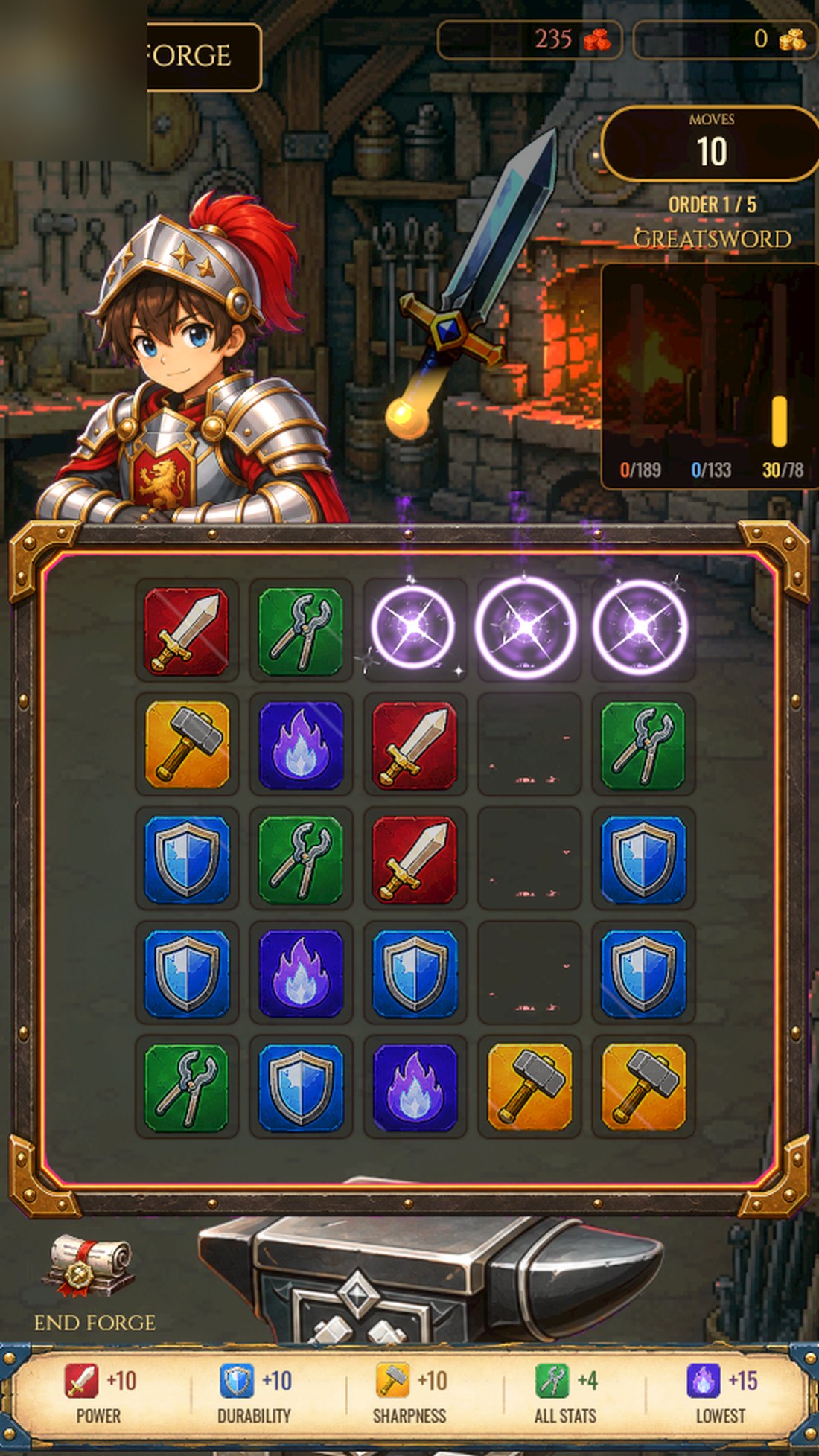
Each piece does a different job
Swords, shields and hammers raise one weapon stat each. Tongs raise all three, while flame adds more points to whichever stat is currently the lowest.
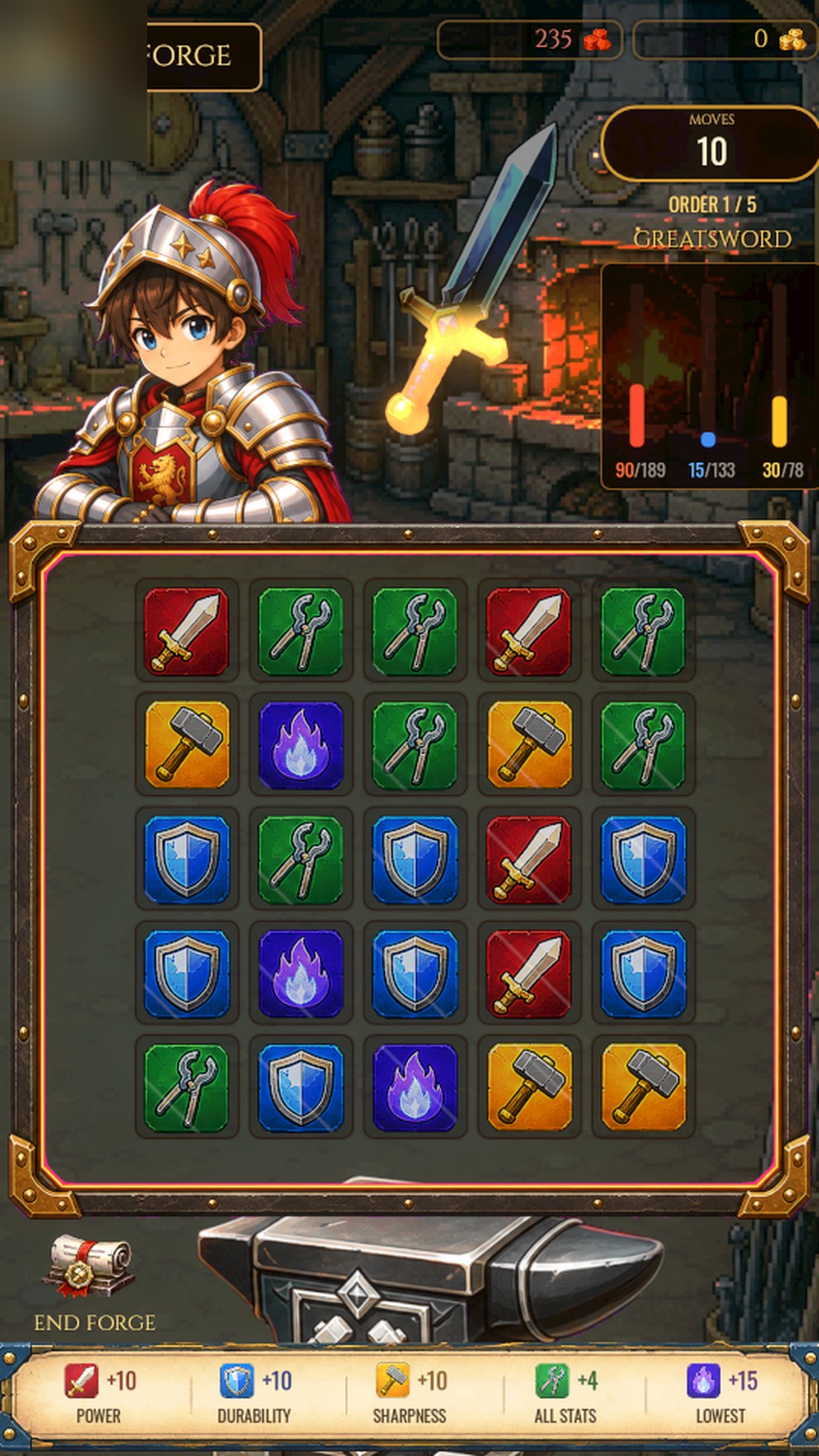
You decide when to stop forging
Every order has a limited number of moves, but you can finish early. Extra moves help with rewards and the highest quality tier, so pushing for one more match can also cost you.
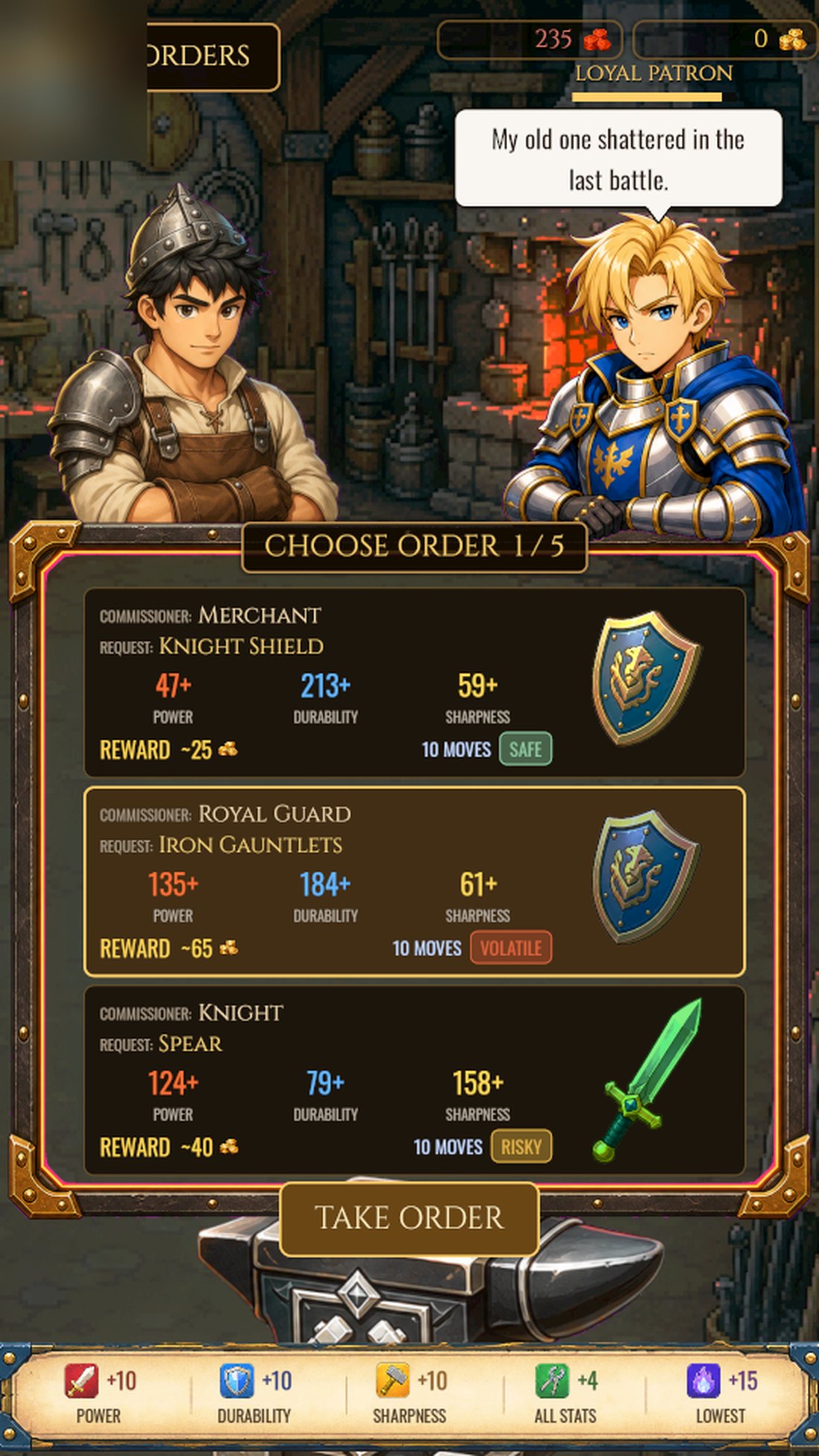
Choose which customer to help
You choose between orders with different requirements, rewards and risks. This also affects which customer relationship you are improving or possibly disappointing.
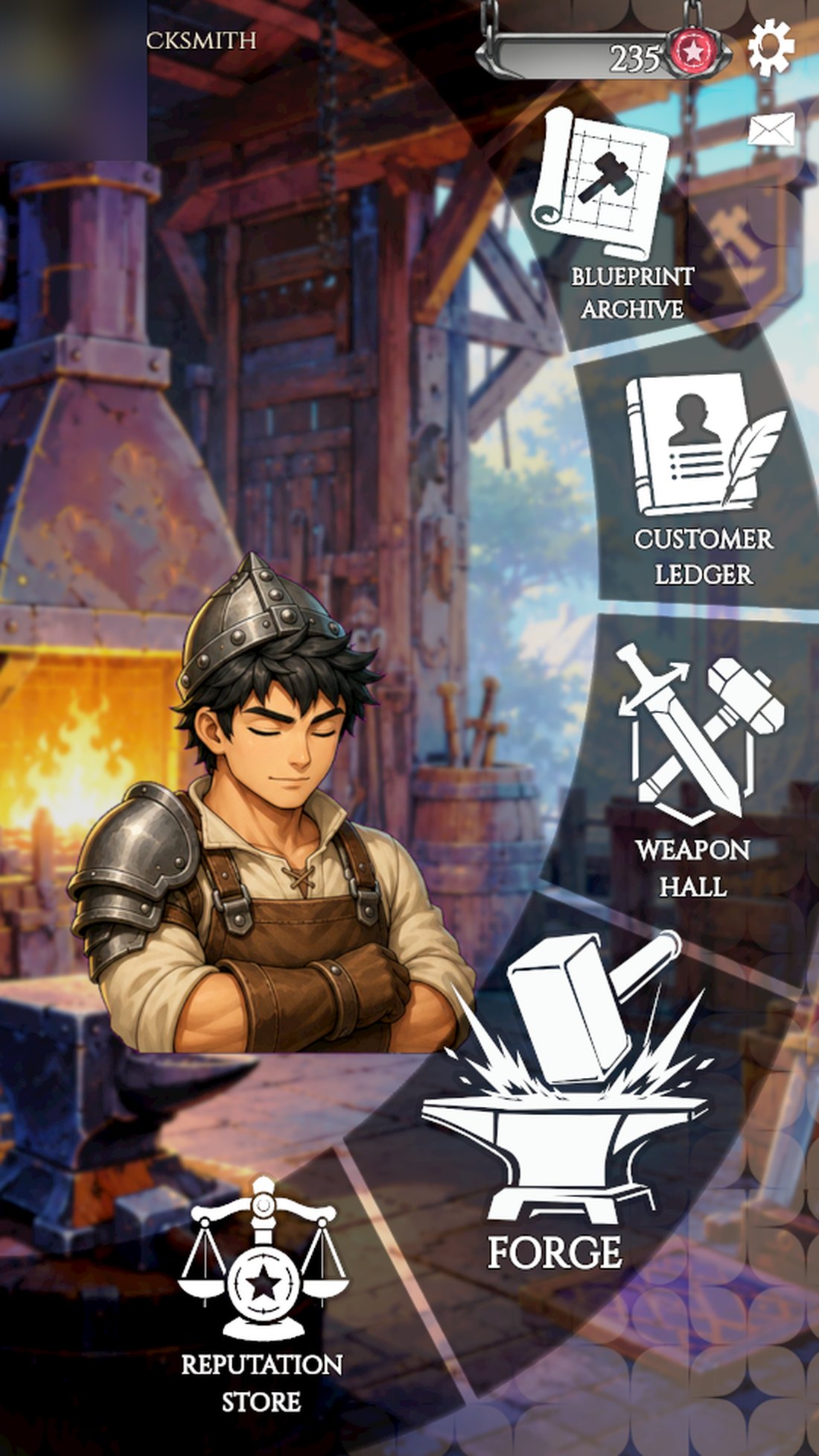
Progress the workshop between runs
The workshop holds your blueprint archive, customer ledger, weapon hall and permanent upgrades. These use Renown so progress between runs is kept separate from the gold used inside a run.
Design notes
Quality depends on how much better you did
Meeting every requirement gives a Standard result. Going beyond the requirements moves the weapon into higher quality tiers. Legendary also requires moves left over, so the best result comes from both strong matches and using those matches efficiently.
| Tier | Condition | Multiplier |
|---|---|---|
| Failed | Any required stat unmet | 0.5× |
| Standard | All met, low surplus | 1.0× |
| Fine | Moderate surplus | 1.5× |
| Masterwork | High surplus | 2.25× |
| Legendary | Very high surplus and moves left over | 3.0× |
The pieces
| Tile | Effect |
|---|---|
| Red sword | +10 Power |
| Blue shield | +10 Durability |
| Yellow hammer | +10 Sharpness |
| Green tongs | +4 to all three: more total, less aimed |
| Purple flame | +15 to whichever stat is lowest |
Customers remember your usual standard
Every customer has a favour score and an expectation based on the weapons you previously made for them. They react to whether the new weapon is better or worse than what they have come to expect from you, and that result changes their expectation for the next order.
The rule
expected → drifts toward delivered
The consequence
Your best work eventually becomes normal. If you keep giving a customer Masterwork weapons, they begin to expect that quality. Maintaining a long relationship therefore becomes harder than making a good first impression.
- Standing runs from 0 to 100 across five tiers. It mainly changes how warmly a customer speaks to you instead of giving a combat advantage.
- Hit zero and the customer leaves the order pool entirely. Winning them back costs renown.
- Winning someone back also resets their expectation, so the relationship can begin again instead of returning at the same difficulty.